Zero Emissions Noosa - Data Dashboard

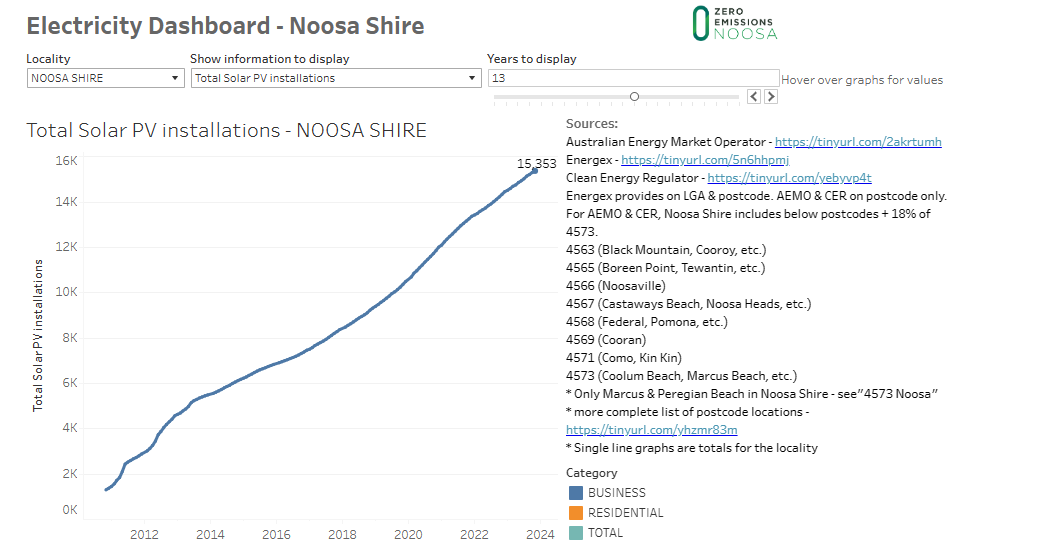
Noosa continues to make strong progress in adopting renewable energy sources, particularly solar energy. By the end of 2024, the shire achieved a total solar PV installation capacity of 96.7 MWh and a battery storage capacity of 6 MWh. However, renewable energy sources still only account for 33% of electricity usage. To achieve the goal of net-zero greenhouse gases, Noosa Shire needs to further enhance solar PV adoption, consider larger-scale renewable energy projects, and implement targeted initiatives to boost solar uptake in coastal areas. Disparities in solar uptake persist between the hinterland and coastal regions due to the prevalence of strata-titled units in coastal areas. Collaboration, public awareness, and ongoing monitoring remain crucial for the successful transition to a sustainable energy future. ZEN’s Rewiring Noosa project initiative continues to transform household energy consumption and accelerate the progress towards net-zero emissions.
Noosa residents and businesses are further reducing their reliance on grid energy and increasingly adopting rooftop solar. This trend is evident in the community’s consistent addition of nearly 1 MW of solar capacity each month through 2024. However, the shire still spends approximately $73 million annually on importing electricity, with businesses accounting for around $26 million of this expenditure.
To meet the goal of zero net greenhouse gases, there is a pressing need to continue enhancing solar PV adoption and transform household and business energy consumption. This can be achieved through strategies such as offering financial incentives, improving access to information on the benefits of solar energy, and implementing supportive policies that promote renewable energy uptake.
Analysis of Noosa’s energy consumption shows that the shire still imports about 22 MW of non-sustainable energy annually (primarily from coal and gas generators on the Energex network). This underlines the key role solar energy plays, having increased Noosa’s share of sustainable energy from nearly 0% in 2000 to 33% in 2024. This improvement results from growing solar system installations, which not only reduce dependency on non-renewable energy but also feed electricity back into the grid.
Looking ahead, projections based on current trends in sustainable energy generation suggest that Noosa remains on track to locally produce more electricity than it consumes by 2036. This milestone is a critical step toward achieving a net-zero emissions energy system. It also serves as a guide for future strategies, including expanding initiatives like Rewiring Noosa, which aims to further transform the region’s energy landscape.
Noosa has made commendable strides in embracing solar generation, battery storage, and electrification, but opportunities remain for growth. By addressing the coastal-hinterland disparity and implementing inclusive strategies to promote renewable energy adoption, the shire can advance toward its net-zero emissions goal—preserving the Noosa Biosphere and ensuring a sustainable future for generations to come.
Recent analysis of energy use trends from 2020 to 2024 reveals steady increases in both residential and business energy efficiency. From January to September 2024, average daily energy use per customer rose by 5.6% for residential customers and 2.9% for businesses compared to the same period in 2023. In contrast, solar energy use per customer declined by 5%, indicating possible changes in system output or consumption patterns. These trends highlight the importance of ongoing investment in efficiency and storage to balance the evolving energy mix.
The chart below illustrates these multi-year trends in energy use.